Showing posts with label vintage. Show all posts

Tuesday, September 22, 2015

Plastic Memories - A Melmac Story

I remember having a plastic divided plate as a child. I think it had Peter Rabbit pictures on it. I ate off that plate until I was much too old to use such a plate but the pictures never faded even after all the washing.


But that wasn't the only plastic plate I remember eating off of in the 60's and 70's; back then we had what I condsidered to be some of the ugliest pea green dishes. Turns out those ugly dishes were actually Melmac dishes. Highly collectible today.


Melmac or melamine as it is often referred to because of the melamine resin or melamine formaldehyde used to produce the plastic dishes that were popular in the 1950's and 1960's; were found in just about every household in the US. 


Melmac was sold as affordable dinnerware. 


Texasware- another plastic resin company is popular for it confetti mixing bowls. 


Now 40 something years later, I have a few collectible Melmac pieces in my own kitchen. One of which is a pea green divided serving bowl to remind me of my childhood.


Wednesday, September 16, 2015

Let's Get Cheesy With It

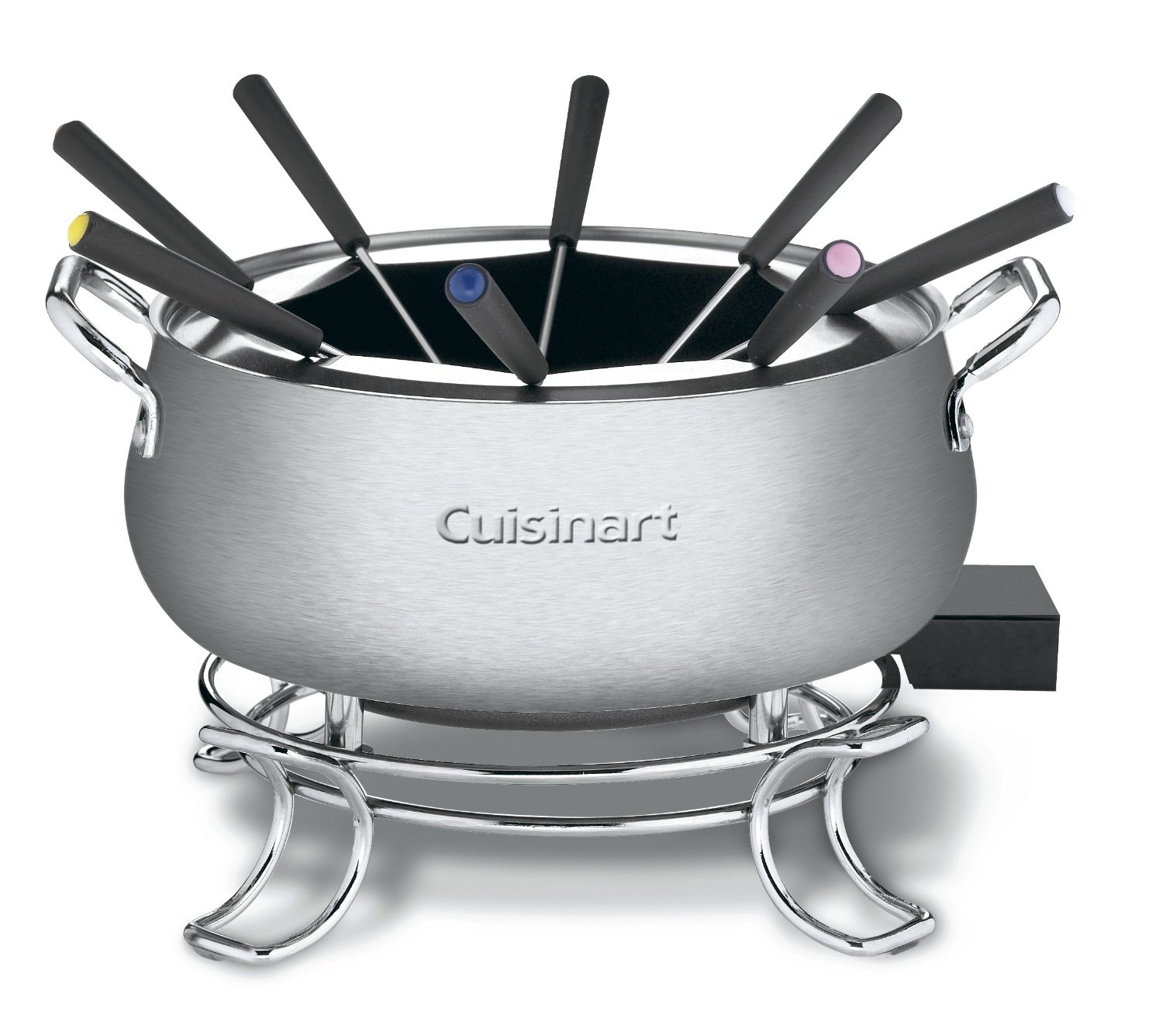
Fondue is the french name for melted cheese served in a fondue pot and heated with a candle or spirit lamp where bread and meats are dipped into it with long forks. 

Fondue has been around for centuries but was popularized by the US in the 1960's. Pots were make from ceramic and copper to stainless steel with most of them made of aluminum with an enamel coating.

They were decorative with food motifs on them like pictures of cheese or mushrooms. Some were very plain and utilitarian. Here are a few.


Fondue parties were all the rage in the 70's. Fondue sets was a poplular wedding gift for the time. Almost every household had one. 


A tradition has it; that if a man loses his bread in the pot then he buys the drinks all around and if a woman does then she must kiss her neighbors. 

If you don't feel like melting your own cheese for a special meal there are several chain restaurants as well as small independent ones that cater to the fondue craze. The Melting Pot is one and it is based out of Florida and has over 150 locations across the US, Canada and Mexico.


So the next time you are feeling cheesy, just pull out the old fondue pot, grab a loaf of crusty bread and good bottle of wine and have your own party.


Friday, January 13, 2012

Plates Serve Up Fashion

If you have been following my posts I mention re-purposing or combining various pieces of patterns or textiles to get the finished result I am looking for. I was browsing for ideas for my blog today and I came across someone else's blog and it immediately brought back childhood memories and perhaps the inspiration for my sewing projects.

I don't exactly remember if I got the Fashion Plates toy as a birthday present or Christmas present but nonetheless it was a present I used for a very long time.


I must have been around 10 when these plates came out on the market but I do remember "playing" with them through my high school years. If you are not familiar with this toy; it comes with several different sized plates of different pieces of one outfit, a set of colored pencils and a frame and onion paper.


After you choose your plates to make your outfit you lay them in the frame, cover with the paper secure the top frame over the plates and use the pencils to color in the design. I made some of the craziest outfits with this toy. I think it would still be cool to have one of these around.

Fashion plates are not a modern means of clothing design. They were used a lot in the late 1900's and early 20th century as pictures in magazines, catalogs and advertising to depict the current fashion to the public. The pictures were not rudimentary but they did have a generic look. They were also used a lot in book illustrating. From my research, before fashion plate illustrations were available to show off the current trend; the outfits were sewn, completed with the desired colors and trim and offered on dolls called berlines. It is said that this is how Marie Antoinette chose her various gowns.


(example fashion plate illustration c1900)

Friday, January 6, 2012

Seeing Through Rose Colored Glasses

I have had to wear glasses ever since I was 2 years old. I didn't like wearing glasses in grade school and the selection was slim and unattractive in the 70s. When I was in high school, in the 80s everyone had cool sunglasses, mostly Ray Bans, remember Corey Hart???

During my high school days, my love of vintage and eccentric dress flourished. There were a few vintage shops that I shopped at regularly and a couple shopkeepers I knew on a first name basis. During one of my shopping trips, at one particular store, the owner said she had something for me. It was a vintage, framed advertisement for Tura eyeglasses. I couldn't believe it! Not only did she think enough of me to offer me such a cute gift but it had my name on it!


After that, I began looking at wearing glasses in a whole new way. I went to my optometrist and inquired about these glasses and the company. They said they COULD do special orders from the company and two weeks later I had a selection to choose from for a new pair of glasses.

The 80s were reliving the 50s, so by a stroke of luck, I was able to find the cutest pair of modern cateye frames! From that day on I didn't mind wearing glasses. I owned it! Today, I have several pair of glasses including prescription sunglasses. Glasses have become my favorite fashion accessory.


Wednesday, August 4, 2010

Tag! You're it!

Labels and tags that are given to people are not always a good thing. Labels and tags for clothing, however; can tell you a story. When shopping for vintage clothing, one of the first things I look for on a piece of clothing is the label. Clothing tags give you the typical information: manufacturer, size, material, etc. If a size and material label are not found; then sometimes I can find an RN number.

RN stands for Registered Number. This means that the clothing manufacturer is registered with the US Federal Trade Commission. RN numbers are very helpful because it will link the piece of clothing to a designer or clothing line. From there, you can search the manufacturer’s years of production. There are several links online including a very informative link on one of my favorite websites: Vintage Fashion Guild
http://www.vintagefashionguild.org/component/option,com_alphacontent/Itemid,100

Not all clothing has tags or RN numbers; this is largely due to the fact that a lot of clothing that was made prior to 1970 was handmade. Handmade clothing is harder to date and identify but usually there are signs to help determine those characteristics. I was sewing on an old cast iron Singer before ever taking a home economics class. As a result, I think that I am more familiar with fabrics and textures than a lot of people nowadays. I am grateful for my interest in clothing at an age when you could choose from several textures and weights in fabric as opposed to the purely 100% cottons that you find at your local fabric stores today.

One thing I can almost always count on when dating fabric is that any heavy polyester or polyester knit fabric is ALWAYS geeky in appearance and ALWAYS 1970’s! But, “Hey”; I am almost always geeky in appearance so I don’t mind being labeled in that respect.

Tuesday, June 22, 2010

To Buy Or Not To Buy...Another Purse. That Is The Question!


June 14, 2010

I need another purse like I need a hole in my head. I can’t help it; it is one of my fashion weaknesses. I justify my purse shopping all of the time. My argument; purses are versatile, functional and people are always commenting on them; “Omigod! I LOVE your purse!” or asking, “Where did you get it? It’s F-A-B-U-L-O-U-S!”

According to some quirky purse forum on the internet; the average woman owns six (6) handbags. I have that many just sitting on top of my dresser! So, let’s discuss purses. Sure, they are practical and serve a purpose. Some historians say men were the more common carriers of purses until the early 19th century. Society exchanged coin money back then and since men were the keepers of the money- well, they carried it…in purses…let’s move on. Now, don’t misunderstand; women carried “purses” too but they were not fashionable. Women’s purses were rather small and not very useful and the need for one was much less than the need of one by a man. During the 19th century it did become fashionable for a young lady to create her own purse; usually a drawstring type. These purses were handmade with intricate beading or needlepoint designs. Years later the beading and needlepoint designs of purses became more and more intricate and more and more popular. It was in the late 19th century that handbags were being designed and sold for women through retail establishments.

Purses come in all sizes, shapes, colors, designs, yada-yada-yada. A few years back, I was shuffling through a pile of junk items. They were of no particular value or consequence; and I picked up a cigar box. Without thinking, I opened the box and put something small into just like I would put something into a small purse or coin purse. Et voila! I was inspired! I had to create cigar box purses! I began collecting boxes of all shapes, sizes and materials from tobacconists and friends. Some of the more decorative cardboard boxes were pretty to look at but not very sturdy for everyday use. I fashioned handles out of wire and Murano beads, I tore apart old purses for the fasteners and findings, I was going to be the next Tom Ford in balsa wood purse history.

At first, I made a purse or two for myself. I considered them edgy; an extension of my personality and attire. And, as mentioned before, people began commenting on them and asking me “Where did you get that?” So, I had another inspiration; I will create OOAK cigar box purses to sell. I found a market for this type of purse and every purse I created I was able to sell. However, the same time that this new found venture was blossoming, I was working 50 hours a week in a demanding legal position and my need to pay homeowner’s insurance and buy groceries outweighed my need to create purses. My art was put on the back burner. Things are different today.

Transforming a cigar box into a purse is a creative way to show off your individuality. The design, though limited to a square box with a hinged lid, can be very artistic. My favorite cigar box purse is adorned with a vintage Bakelite handle, a photocopy of Andy Warhol’s “Marilyn” lacquered on one side of the box and tied to the handle is part of a hot pink feather boa I used to wear while hanging out in the French Quarter. I haven’t used that purse in years but it makes me happy just knowing that it is there- with the other umpteen number of purses I own!

Recycling Will Save The Pelicans


June 2, 2010

There was a time and a place when any well respected, properly dressed, modern woman NOT only wore stockings but she would carry around a spare pair in her purse, just in case. Stockings were made of silk and they averaged about $2.00 a pair, maybe more depending on where you shopped. Today, the average American pays more than $2.00 for their morning cup of coffee. In 1940, the average American household lived on less than $24.00 per week so if you got a snag in your stockings I’m not sure you could just go out and buy another pair of stockings without sacrificing some of the family’s monthly allowance. Then, on May 15, 1940 the Du Pont Company changed how the modern woman bought and wore hosiery. It was the first day that nylon stockings were sold retail!

I came up with the concept of this blog weeks ago and thought it would be fun to explore the world of “plastic” clothing. However, as I am typing it, gallons and gallons of crude oil continue to spill into the waters of the Gulf of Mexico and kill wildlife and seafood sources of the region. I now have writer’s remorse. I don’t want to give the impression that I support offshore drilling as a viable means to continue to produce synthetic clothing and textiles by writing about the fascinating world of nylon.

On April 20, 2010, a semi-submersible exploratory offshore drilling rig in the Gulf of Mexico exploded after a blowout and sank two days later, killing eleven (11) people and causing a massive oil spill threatening the coast of Louisiana, Mississippi, Alabama, Texas, and Florida The rig is owned and operated by Transocean, Ltd., on behalf of BP.

Now, as I re-read what I started to write; I ponder this notion; “Did Mr. Du Pont’s vision of re-creating a world of synthetic fibers and materials for clothing include killing off some of our world’s richest, natural resources?” In 1937 new and exciting studies on hemp were being introduced to society. These studies of hemp coincided with Mr. Du Pont patenting his creation, nylon. Over the years it has been argued that Mr. Du Pont paid millions of dollars to private organizations to create special groups that advocate the criminalization of the production of hemp and slander its positive qualities, especially its use as a fiber in textiles. Do any of the labels on your clothing say 100% hemp? I know I don’t have any. The majority of my wardrobe is created from a fabric made of blended synthetics and cottons. Supporting recycling and reuse of already manufactured clothing, such as vintage articles is a safer way to wear the fabrics of the future.

I pray that the oil executives will control the spill and cease the production of future spilling of oil into the Gulf very soon. I also pray that a new awareness of the idea: “You Are What You Wear” will surface and force the textile industry to re-think how fibers are used.

Does Vintage Always Mean Collectible?


May 13, 2010

“Look at this great t- shirt Aunt Tura!” I heard my niece yell these words across the rows of clothing racks at my local Goodwill. I went over to see what had excited her so much. “This is cool, huh? And, it is old; it says 1978 on it!” she said. My heart gave a flutter; at last, I have a protégé to teach the finesse of vintage shopping. Upon closer inspection my fluttering heart sank. I always check the tags of clothing first and it read Old Navy. “Oh, it’s a cute top, but its retro” I said. “Retro? Isn’t that old?” she asked. Protégé, she may still be! Here was a perfect opportunity for me insert a quick tutorial on shopping for clothing and items considered vintage and collectible.

Generally speaking, clothing and mass produced goods that were manufactured before the 1920s are referred to as antique. Items from the 1920s through the mid 1980s are considered vintage. Retro, short for retrospective usually refers to items that imitate the style of a previous decade. Goods that are produced currently are usually called modern or contemporary. Opinions can vary on these definitions. This is how I determine the age of clothing and items and describe them as vintage. Do I consider all vintage items collectible? Uh, no. So, how can something that by its age can be considered vintage; be considered valuable or collectible? That’s easy: supply and demand.

The best way to see supply and demand work is on eBay. Nowadays people want green options and so recycling clothing and household items is a big motivator. Online commerce has created a whole new batch of vintage dealers because buying and wearing vintage clothing and accessories has become tres chic as well as responsible. Searching for buying opportunities online is the perfect place to see vintage vs. old crap being sold. I am in constant awe of people and their ignorance. For example; I found a listing for a Vintage 50’s Poodle Skirt. Yes, it was a skirt. Yes, it had a poodle on it. Was it vintage? Uh, no. The skirt was a costume reproduction. Was it crap? Not necessarily. I was very let down though, because I really wanted to purchase a vintage poodle skirt for $1.00! Did the seller try to deceive me with his description? Perhaps he did try. I do not condone this selling practice but this is how the supply and demand premise works. If a seller puts the word vintage in front of an item it will attract buyers. I do believe that many a seller and buyer of vintage are being led astray.

There are several online sites to help the novice vintage buyer educate themselves. I have found sites dedicated to indexing the RN number of clothing manufacturing. These numbers are found on garment tags and the number will correspond to a certain date. The RN numbers were assigned by the Federal Trade Commission for clothing manufactured in the US. This tag number makes it easy to look up it’s “circa” date. I also love to peruse costume sites for references. I might find parts of a dress or suit that was popular in an era to help determine its age. Because retro clothing of the 50’s is becoming more popular, we know a lot of it is mimicking the WWII era. So, be an educated buyer. Do some google-ing and become an expert of vintage vs. crap.

So; back to my little shopping tutorial. “So, how do you know if it is old and collectible, Aunt Tura? Some of the stuff I see in your store just looks old and ugly!” Nikki said. “Years of experience, Nichole. According to my standards for aging items I, myself would be described as vintage!”

Ode to Malcolm's Fashion Sense


It has been five days since I heard the news that Malcolm McLaren passed away. When I heard the news I felt ambivalent. I didn’t want to do a “happy” dance or shed a tear. *shrug*. Whatever…So why am I blogging about this? Reflection tends to come with death; any death, and Malcolm’s death has made me pause and reflect upon my fashion influences.

I vividly remember trying to recreate the looks that were depicted in the film “The Great Rock ‘n’ Roll Swindle”. I saw the beautiful and the vulgar coexisting and that concept excited me! This was the first time I ever heard the name Malcolm McLaren and it was also during this time that I was most excited about clothing. I started to read all the fashion rags including the imported “Vogue” magazines from London and Paris. I thought I was so chic.

The 80’s were a great time for me to mix and match and have fun with clothes. Vintage clothing seemed to be teeming from every thrift store and parents of friends were giving it away to me in truckloads! I would put together the most hideous outfits, wear them, knowing I might be put to ridicule but damn it, I was proud of my creations. I ponder what my wardrobe would have been like all these years if I had never seen video clips of Adam Ant on music shows prior to Mtv.

Today, I still have fun mixing and matching styles, designs, colors and textures. Now I take cues from Betsey Johnson and designers on Etsy. I’m not hard to miss sporting a Joan Jett haircut, wearing Chuck Taylors and a Max Azria dress while carrying one of Betsey’s signature bags.


Malcolm didn’t put his name on a label, and there are those of you out there to dispute just what he DID contribute to fashion; but acknowledging he was in the middle of an explosive time of fashion is without a doubt.

Vintage Is As Vintage Does

April 5, 2010

It is no accident that I am a vintage enthusiast. Pictures of my childhood in the late 60's capture me wearing black and white saddle shoes and baby blue cat eye glasses. I cannot remember a time that I was NOT playing dress up.


At the very young age of 6 or 7, I wanted to increase the wardrobe changes for my Malibu Barbie. My Grandma Mary taught me how to sew on her 1920's cast iron Singer sewing machine and my fashion direction took a new turn. In the 70's and 80's I created and sewed many a theatrical costume during my high school drama career as well as ones for my children in later years. No matter what the time period was; my costumes were always created with vintage in mind.

Incorporating vintage and modern fashions and accessorizing with textiles and millenary became my own personal style. Almost 30 years later- the story is the same but now I am offering my passion and love of vintage to everyone worldwide.